On to the next level?
You compete regularly and want to get more serious. What separates riders who move up from those who plateau: training planning, equipment choices, mental preparation, and which instructor or national coach takes you further.
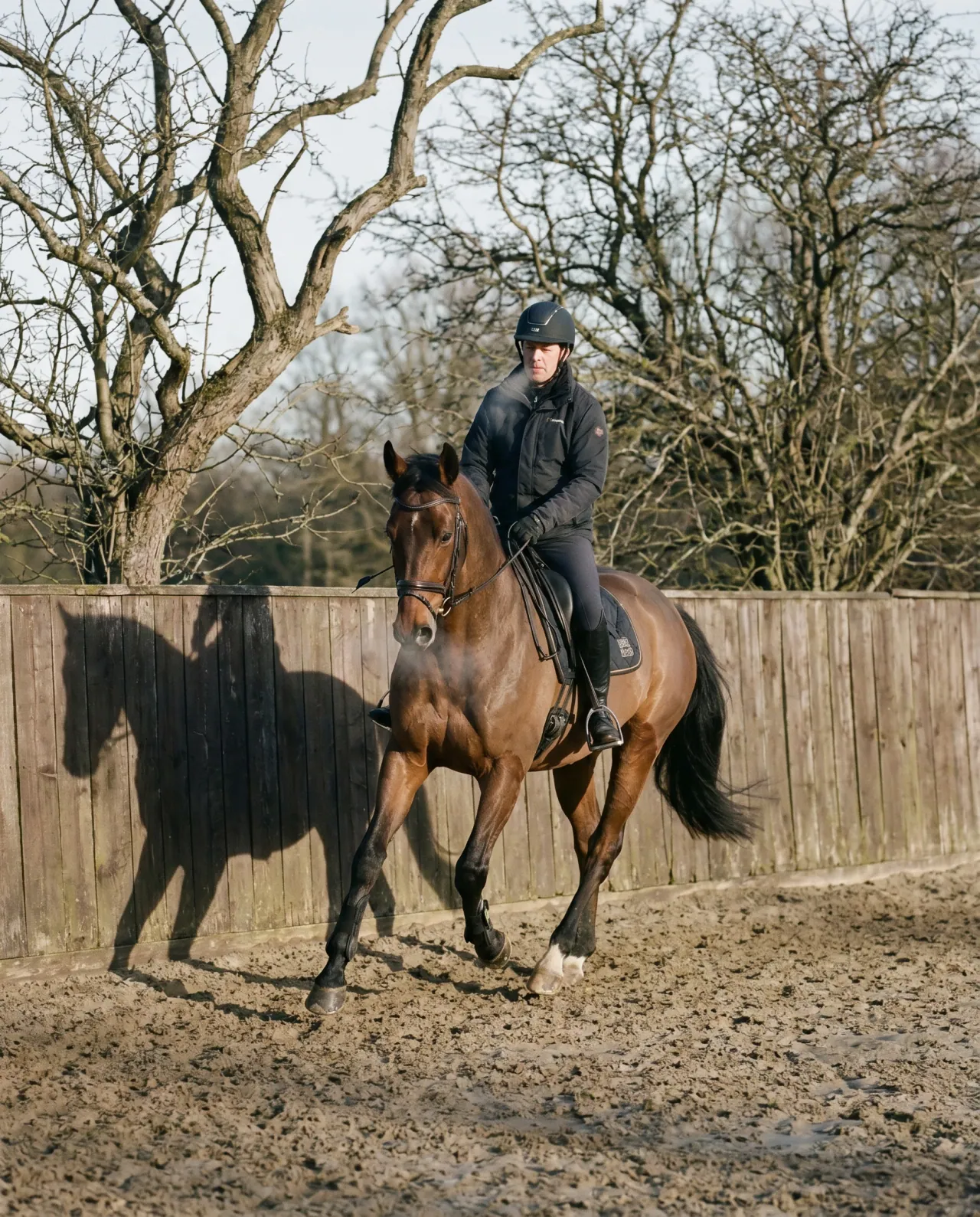 M, Z, ZZ-Licht on the horizon
What to read here.
Arthritis and Bone Spavin in Horses: Recognizing and Managing It
What arthritis is, why bone spavin is the best-known form, the warning signs, and how to keep an arthritic horse working through exercise and a plan.
6 min readAuxiliary Reins: Types, How They Work, and the Limits of Their Use
What side reins, Lauffer reins, chambons, and draw reins do, when auxiliary reins make sense, and why correct lunging usually works better.
6 min readBuying a Horse at Auction: How It Works and What to Watch For
How a horse auction runs from catalogue to sale, which costs come on top of the hammer price, and why the burden of due diligence falls on you.
6 min readGastric Ulcers in Horses: Vague Signs, Clear Causes
How to recognize gastric ulcers (EGUS) in your horse, which stable and feeding factors cause them, and what management can prevent.
6 min readImporting a Horse to the Netherlands: Paperwork, Vetting, and Transport
What's involved in a cross-border purchase: viewing at a distance, the on-site vetting, the contract, paperwork, transport, and the total costs.
6 min readNavicular Disease in Horses: Recognizing It and Managing It
What the navicular region is, why the term covers several conditions, the signs to watch for, and how to manage it with vet and farrier.
6 min readPhysiotherapist, Osteopath, or Chiropractor: Paramedical Care for Your Horse
When a physiotherapist, osteopath, or chiropractor can help your horse, why the vet always comes first, and how to recognize a good practitioner.
6 min readRiding a Dressage Musical Freestyle: From Music Choice to Floor Plan
What a musical freestyle is, how to choose music that fits your horse's gaits, and how to build a floor plan that scores well.
6 min readSurviving Stall Rest: Keeping Your Horse Mentally and Physically Whole
Why stall rest is prescribed, why it's hard on a horse, and how to limit stress, stomach issues, and boredom until it can move again.
6 min readTraining a Young Horse: The First Steps Under Saddle
From groundwork and handling basics to backing and the first year under saddle: training a young horse without overloading body or mind.
6 min readStraightness: Training Your Horse's Natural Crookedness
Why almost every horse is crooked, how to recognize a hollow and stiff side, and which exercises gradually straighten your horse.
6 min readCavaletti and Gymnastic Jumping: Building Strength and Balance
How to train strength, rhythm, and jumping technique with poles and grid exercises — with guideline distances for walk, trot, and canter.
6 min readSuppleness: Riding Your Horse Over Its Back
What suppleness means, how to tell if your horse is moving over its back, and how to ride tension out of your training.
5 min readFlexion and Bend: The Basis of Every Turn
The difference between flexion and bend, how to ask for both with inside leg and outside rein, and the mistakes that ruin a turn.
5 min readReading KWPN Studbook Papers: Pedigree and Predicates Explained
What studbook papers and predicates like Ster, Keur, and PROK mean when you're buying a horse — and what they don't guarantee.
6 min readThe Pre-Purchase Exam: What Happens and What the Results Mean
How a pre-purchase exam works, what clinical and X-ray checks cover, what it costs, and how to read the results.
6 min readRiding Transitions: Why They Work and How to Train Them
Why transitions between and within the gaits train balance, hindquarters, and attention all at once, and how to ride them better step by step.
5 min readEndurance Riding for Beginners: Preparing Your First Distance Ride
What endurance riding involves, how to build your horse's fitness, and how to approach a first ride of roughly 25 to 40 km.
5 min readGaited Horses and the Tölt: Meet the Icelandic Horse
What makes gaited horses different from ordinary riding horses, how the Icelandic horse's tölt feels, and why the breed suits beginners.
5 min readTREC: An Introduction to This All-Round Riding Sport
What TREC is, how a competition is structured, and why this trail-riding sport is accessible to a wide range of horses and riders.
5 min readIntroduction to Western Riding and Reining
What makes western riding different from dressage and show jumping, and how reining works as a competition discipline.
5 min readWorking Equitation: An Introduction to the Discipline
What working equitation is, where the discipline comes from, and what a competition involves — an introduction to a lesser-known discipline.
5 min readLateral Movements: Shoulder-In, Travers, and Half-Pass Explained
What shoulder-in, travers, and half-pass are, what these lateral movements train, and in what order you build them.
5 min readLearning Carriage Driving: Harnessing Up and Your First Competition
Learning carriage driving: where to find lessons, what a single hitch and harness involve, and how a competition with dressage, cones, and marathon works.
5 min readOn the Bit: What It Really Means to Ride With Contact
What being on the bit means, how to get your horse riding with contact, and the mistakes that break that connection.
5 min readPiaffe, Passage, and Pirouette: The Movements Behind the Hardest Dressage Classes
What piaffe, passage, and pirouette actually are, why they rely on collection, and how the training toward them unfolds over years.
5 min readTeaching the Flying Lead Change: Fixing a Late Behind
How to teach the flying change, and how to fix a horse that changes late behind.
5 min readToo Fat or Too Thin: Assessing and Adjusting Your Horse's Weight
How to use the body condition score and a weigh tape to judge whether your horse is too fat or too thin, and adjust its weight gradually.
6 min readBreaking Through a Riding Plateau When Progress Stalls
What to do when you feel like you're no longer improving at riding — common causes, how to find yours, and practical ways to break through.
6 min readBuilding Fitness and Condition in Your Sport Horse
How to get a sport horse physically fit for harder work — building stamina, strength, and recovery step by step without injury.
5 min readBuying a Second or Better Sport Horse
A focused search for a more competitive horse — what to look for in talent, health, and the match with your own level and ambition.
6 min readCaring for a Senior Horse: Cushing's Disease, Weight, and Adjusted Care
What changes as your horse ages — from coat and weight issues to Cushing's disease (PPID), dental care, and an adjusted care routine.
5 min readChoosing the Right Instructor or Trainer at M-Z Level
How to choose a dressage trainer who fits you at M and Z level — what to look for, what to ask, and when switching makes sense.
6 min readColic in Horses: Recognizing Symptoms and What to Do Right Away
Recognize colic from your horse's behavior, judge how serious it is, and know exactly when to call the vet — a practical triage guide.
5 min readCommon Skin Problems in Horses: From Rain Rot to Sarcoids
Bald patches, scabs, and lumps: how to tell common horse skin problems apart and know when to call the vet.
6 min readCompetition Day Logistics and Transport: Trailers, Timing, and Stabling
What competing more often and farther afield involves: the right driving license, transport, planning, and stabling at the show.
6 min readWhat Serious Competitive Riding Costs Per Year
An annual budget for serious competitive riding — what a season costs on top of fixed horse-keeping expenses: training, competitions, equipment, transport.
6 min readDeworming Horses: When, How Often, and Why Fecal Egg Counts Are Smarter
When and how often to deworm a horse, why fecal egg counts are replacing fixed schedules, and how to prevent resistance.
5 min readDIY Training vs. a Professional Trainer
When do you train your horse yourself, and when do you send it to a professional? Weighing cost, time, and results.
6 min readRecognizing Eye and Ear Problems in Horses
A watery or squinting eye, or a horse shaking its head: how to read the signals, what to do yourself, and when to call the vet.
5 min readFeeding and Supplements for the Working Sport Horse
How to adjust your horse's ration for harder work: forage as the base, dosing concentrate feed, and when a supplement is actually worth it.
5 min readYour Horse's Teeth: Dental Checks, Floating, and Warning Signs
How often to have your horse's teeth checked, what floating involves, and which eating or bit problems point to a dental issue.
5 min readHorse First Aid: Building a Kit and Treating Wounds
What belongs in a first aid kit for your horse, and how to assess, clean, and bandage a wound until the vet arrives.
5 min readHorse Supplements: What Actually Works
When a supplement is worth it and when it isn't — joint supplements, electrolytes, and the rest, with a clear-eyed look at the claims.
6 min readHorse Vaccination Schedule: Shots, Timing, and KNHS Rules
Which vaccinations your horse needs, how often to repeat them, and the influenza requirement the KNHS sets for competing.
5 min readHow Much to Feed Your Horse: Hay, Concentrate Feed, and Daily Amounts
How to work out how much hay and concentrate feed your horse needs per day, based on its weight and the work it does.
5 min readIs Your Horse Ready for the Next Level?
How to tell whether your horse is physically and mentally ready for harder work, and when it's better to wait.
5 min readTracking Progress: Keeping a Horse Training Log
What to note after every ride, and how weeks of entries reveal trends in scores, health, and technique instead of relying on gut feel.
5 min readLameness in Horses: Finding the Sore Leg and When to Call the Vet
How to recognize an irregular gait, locate the sore leg, judge how serious it is, and know when to call the vet right away.
6 min readLaminitis in Horses: Causes, First Aid, and Prevention
How to recognize laminitis in horses, what to do during an acute attack, and how to reduce the risk in spring.
5 min readManaging Competition Nerves and Anxiety
Why you freeze up at a competition and what to do about it: breathing, routines, and focus to get nerves and blanking out under control.
5 min readMud Fever in Horses: Treating and Preventing Those Stubborn Scabs
Mud fever causes scabs and swollen lower legs that are easy to spot but slow to clear. Here's how to treat it and stop it coming back.
4 min readWorm-Free Pasture: Pasture Management to Reduce Parasite Load
How manure removal, pasture rotation, and targeted deworming keep parasite pressure low on your pasture — without deworming more than necessary.
5 min readPreventing Injury and Overuse When Training Gets More Intense
How to protect your sport horse's body as training intensity rises: buildup, footing, recovery, and the early signs of a tendon injury.
5 min readRespiratory Problems in Horses: Coughing, Heaves, and Stable Dust
What coughing and labored breathing can mean, which signs to take seriously, and how to reduce dust in the stable.
5 min readTraining Your Rider Fitness and Posture
How riders build strength and symmetry, with targeted core, balance, and posture exercises that improve your scores in the ring.
6 min readHow to Prepare a Dressage Test and Score Higher
How to ride a specific test more deliberately and use the judge's scoresheet to see where you gain — and lose — points.
6 min readSeasonal Coat Care for Horses: Clipping, Blankets, and Shedding
When to clip a horse, when a blanket is needed, and how to adjust seasonal care for coat, sweat, and weather.
5 min readSetting Training Goals and Season Plans
How to plan a full competition season around one main goal — from choosing it to the calendar, training periods, and a moment to adjust course.
5 min readStable Management and Hygiene: A Healthy Environment for Your Horse
How to set up a healthy horse stable — bedding, ventilation, mucking out and hygiene that protect the airways, hooves and skin.
5 min readStructuring a Training Week That Works (From M to Z)
How to build a weekly schedule for your dressage horse — the balance of technique, fitness, suppling, and rest, periodized around competitions.
6 min readSweet Itch in Horses Explained: Managing the Itch Through Summer
What sweet itch is, how to recognize it, and how to manage the itch with rugs, shelter, and skin care through summer.
5 min readTendon Injuries in Horses: Recognizing, Cooling, and the Long Road to Recovery
How to recognize a thickened tendon or warm leg after exercise, what to do right away, and why recovering from a tendon injury takes so much patience.
6 min readUnderstanding the Judging Protocol and Your Scores
How to read a dressage judging protocol, understand why you scored as you did, and find which movements offer the most room to improve.
4 min readWalking and Riding a Show Jumping Course
How to walk a show jumping course smartly — pacing off distances, choosing lines and tempo — and ride that plan clear at the higher levels.
5 min readWhen to Call the Vet: Urgency Levels, Emergencies, and Visit Costs
How to judge whether your horse's complaint can wait or is an emergency, what to report by phone, and what a vet visit costs.
5 min readWhen to Move Up a Class: Signs You're Ready to Promote
When moving up to M or Z dressage makes sense — the signs you're ready, and the pitfalls of promoting too soon.
4 min readWhich Tack Actually Makes a Difference — and Which Doesn't
Which purchases actually affect your riding and your horse, and where paying more buys comfort or style rather than performance.
4 min readWhat everyone asks.
When does it make sense to move up to M?+
Points-wise, you may as soon as you have three prizes at L. Sport-wise: only when your horse can hold the basic collection work (half-halt, shoulder-in, head carriage) in walk and trot under pressure. Moving up too early costs two years of repair — waiting until the M test is achievable in training gives more durable progress.
How often should I train per week at this level?+
Riding 4–6 times is standard for M to Z. A typical split: 2× dressage technique, 1–2× fitness (walk-trot hacking out or jumping), 1× lunging or groundwork, 1× rest day or turnout. More important than frequency is variety — otherwise horse and rider both wear out mentally.
Which instructor fits the M–Z level?+
Someone who is actively competing at class Z or higher in your discipline, has regular students who move up, and is willing to repeat the same basics every week. Avoid instructors who only reward 'pretty riding' and give no technical corrections. Rates usually run €45–€85 per hour, with packages that discount single lessons.
Amounts shown are indicative — actual rates differ per provider, region and season.
On to
talent pathway.
You're at the top of your age group and aiming for the KNHS youth team or a talent program. How do you get there, what's expected of you, what does it cost, and how do you combine it with school?